275 or 600 g m² Zinc How GI Expanded Metal Coating Weight Dictates Decades of Facade Life
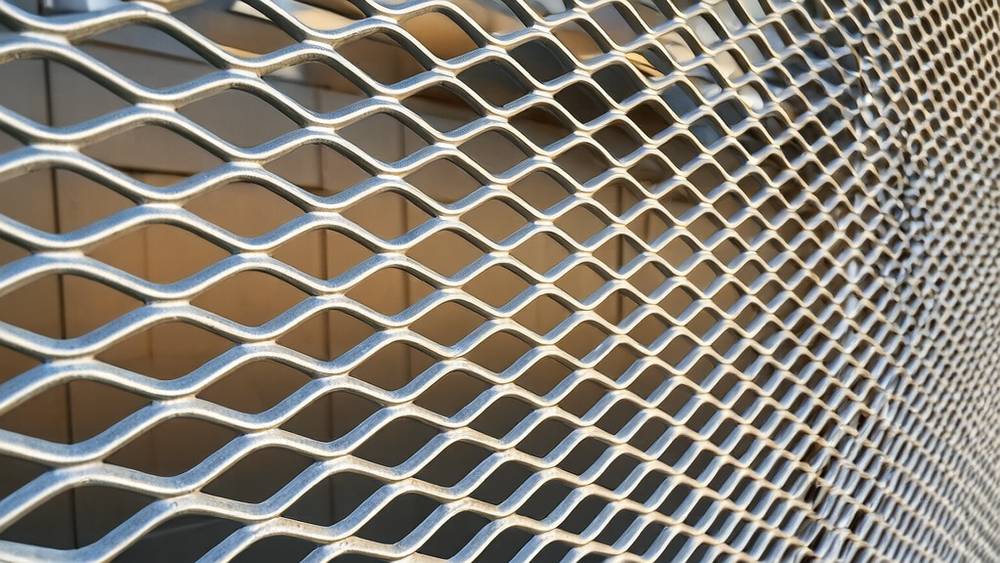
Walk onto any mid-rise construction site in Southeast Asia or the Gulf states right now, and there is a strong chance you will see bundles of gi expanded metal being hoisted up to serve as external plaster lath, security screening, or ventilation grille backing. The material itself is nothing new: galvanized iron sheet, slit and stretched into a diamond mesh, has been around for decades. What has changed is the quiet proliferation of substandard zinc coatings showing red rust within 18 months of installation, long before the building even reaches practical completion. This article focuses on one specific, measurable variable that determines whether your gi expanded metal performs for 5 years or 25: the zinc coating weight, expressed in grams per square meter (g/m²), and how it intersects with exposure conditions defined in ISO 9223 atmospheric corrosivity categories. If you currently specify gi expanded metal based solely on mesh pattern and sheet gauge, you are missing the parameter that actually drives lifecycle cost.
The Coating Weight Blind Spot in Procurement Documents
Most procurement specifications for gi expanded metal read something like: "Diamond mesh, 25 mm x 12 mm opening, 3.0 mm strand thickness, galvanized finish." The problem with this line item is that "galvanized finish" means nothing without a coating weight tolerance. Hot-dip galvanizing to ISO 1461 can produce coating weights ranging from roughly 275 g/m² (approximately 20 µm per side) on thin sheet to over 600 g/m² on heavier sections. The difference between 275 g/m² and 600 g/m² is not minor, it is the difference between the zinc layer being fully consumed by atmospheric corrosion in 6 years versus 25-plus years in a C3 medium-urban environment.
Contractors who price gi expanded metal on a per-square-meter basis without locking in a minimum coating weight are effectively inviting suppliers to deliver the lowest zinc loading they can get away with. This is not theoretical. In 2023 a 12-storey mixed-use development in Colombo had to replace over 1,800 m² of external soffit mesh 14 months after installation because the gi expanded metal, specified only as "galvanized," arrived with an average coating weight of 210 g/m². The coastal chloride exposure, classified as C4 under ISO 9223, stripped the zinc in under a year and left the base steel pitting. The replacement cost, including access scaffolding and lost rental income from ground-floor retail units during the works, exceeded the original material saving by a factor of roughly eight.
ISO 9223 Corrosivity Categories: Why Geography Dictates Your Coating Spec
ISO 9223 defines atmospheric corrosivity in six categories, from C1 (very low, heated interiors) to CX (extreme offshore/industrial). Most gi expanded metal deployed in building envelopes falls into C2, C3, C4, or occasionally C5 environments. The category is not academic. It directly translates to zinc corrosion rate, measured in micrometers per year, which in turn dictates the minimum coating weight you should be specifying.
A C2 environment (rural inland, low pollution) corrodes zinc at roughly 0.1 to 0.7 µm per year. A C3 environment (urban/industrial, moderate SO₂) pushes that to 0.7 to 2.1 µm per year. C4 (coastal with moderate salinity or heavy industrial) accelerates to 2.1 to 4.2 µm per year. C5 (aggressive marine/industrial) runs 4.2 to 8.4 µm per year. These numbers come from the ISO CORRAG atmospheric exposure program, which ran multi-year coupon tests across dozens of global sites. If your project is in Dubai Maritime City (C4/C5 borderline) and you specify gi expanded metal with a 20 µm zinc coating, you are giving the building roughly 5 to 7 years before red rust appears. That might be acceptable for temporary hoarding. It is not acceptable for permanent architectural mesh.
Translating Coating Weight to Service Life: A Practical Calculation
The relationship between coating weight and service life is linear in principle but non-linear in practice once you account for edge effects, cut-strand exposure, and local microclimates. As a starting rule: each 100 g/m² of zinc coating (roughly 7 µm per side on expanded metal with uniform coverage) will protect the base steel for approximately 3 to 5 years in C3 conditions, 1.5 to 2.5 years in C4, and under 1 year in C5.
This means a gi expanded metal sheet with 275 g/m² total zinc (roughly 19 µm per side) has a theoretical zinc life of about 8 to 14 years in C3. Double that to 600 g/m² and you are looking at 20 to 30 years in the same environment. The steel substrate thickness then provides additional structural life after the zinc is consumed, but for architectural applications where visible rust is a defect, zinc depletion is effectively the end of functional life.
One nuance often missed: expanded metal has cut edges along every strand. When the sheet is slit and stretched, the raw steel edges are exposed. In a properly hot-dip galvanized product, these edges pick up a zinc film during immersion, but the coating is thinner at the strand edges than on the flat surfaces. This means the effective corrosion protection at strand edges, the most visually critical part of the mesh, is lower than the nominal coating weight would suggest. A prudent specification accounts for this by applying a 20 to 30 percent safety margin on coating weight relative to the calculated requirement.
| ISO 9223 Category | Typical Environment | Zinc Corrosion Rate (µm/year) | Min Recommended Coating Weight (g/m²) | Approximate Zinc Life (years) |
|---|---|---|---|---|
| C2 | Rural inland, low humidity | 0.1 – 0.7 | 275 | 25 – 50+ |
| C3 | Urban, moderate SO₂ | 0.7 – 2.1 | 350 – 450 | 15 – 30 |
| C4 | Coastal (3-10 km inland), industrial | 2.1 – 4.2 | 500 – 600 | 10 – 20 |
| C5 | Aggressive marine/industrial | 4.2 – 8.4 | 600+ or stainless steel | 5 – 12 |
| CX | Offshore, extreme chemical | 8.4 – 25 | Stainless steel only | N/A |
Hot-Dip Galvanizing vs Pre-Galvanized vs Electroplated: The Coating Integrity Gap
Not all gi expanded metal labelled "galvanized" receives its zinc through the same process, and the process fundamentally determines coating uniformity across the expanded mesh geometry. Hot-dip galvanizing (HDG), where the fully expanded sheet is immersed in molten zinc at approximately 450°C, produces a metallurgically bonded zinc-iron alloy layer with a pure zinc outer layer. This process is governed by ISO 1461, which mandates minimum coating weights based on steel thickness. For steel 1.5 mm to 3 mm thick, the minimum is 275 g/m²; for 3 mm to 6 mm, 350 g/m².
Pre-galvanized sheet (also called mill-galvanized or continuous hot-dip), where the flat steel coil is zinc-coated before expansion, typically carries a lighter coating, 100 to 275 g/m² depending on the grade. When this pre-coated sheet is then slit and stretched into expanded metal, the cut edges expose raw steel with zero zinc protection. This is a critical failure point. A pre-galvanized gi expanded metal panel may look identical to an HDG panel on day one, but the unprotected strand edges will begin rusting within weeks in any exterior application.
Electroplated zinc, sometimes marketed as "electro-galvanized expanded metal," applies a thin zinc layer, usually 10 to 50 g/m², through an electrochemical bath. This coating is cosmetic for interior use only. It has no place in any external building application, yet it appears in the supply chain because it is cheap and looks shiny when new. Procurement teams unfamiliar with the difference between electroplating and hot-dip galvanizing are the ones who end up with rusted mesh on their project.
Supplier verification matters here. Reliable manufacturers, such as Futeng® from China, who supply gi expanded metal alongside solid aluminium cladding systems, will typically provide mill certificates showing actual coating weight measurements from magnetic thickness gauges per ISO 2178. If your supplier cannot produce these certificates, the coating weight on your mesh is an unknown variable, and unknown variables in exterior metalwork become expensive problems.
Reading a Mill Certificate: The Three Numbers That Actually Matter
A galvanizing mill certificate for gi expanded metal should include three coating-related metrics: the specified minimum coating weight (g/m²), the measured average from the batch, and the measured minimum on any single reading. ISO 1461 requires that the average of all measurements meets or exceeds the specified minimum, and that no individual reading falls below the local minimum (typically 70 to 80 percent of the specified average).
If a certificate shows a specified minimum of 350 g/m², an average of 355 g/m², and a minimum individual reading of 340 g/m², that batch is compliant. If the average meets spec but individual readings drop to 200 g/m², the batch is non-compliant because those low spots, likely on strand edges or inside mesh openings, will corrode first and become highly visible. Rejecting non-compliant gi expanded metal before it leaves the supplier's yard is infinitely cheaper than arguing about it after installation.
For project managers, the practical step is to add three lines to the material submittal checklist: (1) galvanizing standard (must state ISO 1461 for HDG), (2) minimum coating weight (g/m²) matched to the ISO 9223 corrosivity category of the site, and (3) magnetic thickness test results per ISO 2178 with average and minimum values. These three lines, which take under a minute to review, prevent roughly 80 percent of the premature rust failures observed on construction sites.
When Zinc Alone Is Not Enough: Supplementary Coatings for C4 and Above
In C4 and C5 environments, even 600 g/m² hot-dip galvanizing may not deliver the 25-plus-year service life that building owners expect from permanent architectural components. Two supplementary strategies are common: duplex coating (HDG plus an organic topcoat) and material substitution to stainless steel or aluminium.
A duplex system applies a polyester or epoxy powder coat over the HDG gi expanded metal. This creates a barrier-plus-sacrificial protection combination: the organic topcoat shields the zinc from direct atmospheric exposure, and the zinc underneath provides cathodic protection at any scratches or pinholes. The combined system can extend service life by a factor of 1.5 to 2.5 compared to HDG alone, depending on topcoat quality and UV stability. The additional cost is typically 30 to 50 percent over bare HDG, which is modest compared to the cost of premature replacement.
For C5 and CX environments, or for architectural mesh that is difficult to access for maintenance, the smarter specification may be to abandon galvanized steel entirely in favour of 304 or 316 stainless steel expanded mesh, or solid aluminium expanded panels. Aluminium expanded mesh, being inherently corrosion-resistant in most atmospheric conditions, eliminates the coating weight question altogether. The trade-off is a higher material cost, roughly 2 to 3 times that of gi expanded metal, but zero zinc depletion risk over the building's life.
Regional Supply Chain Realities: Where Coating Weight Gets Lost
The global supply chain for gi expanded metal has a structural problem: the majority of production capacity is in China, India, Vietnam, and Turkey, while the majority of specification writing happens in London, Dubai, Singapore, and Sydney. When a specification simply says "galvanized finish" without a coating weight, a procurement officer in a cost-pressured environment will source from the lowest bidder. That lowest bidder, operating in a market where price competition is ferocious, will deliver the minimum coating they can while still calling the product "galvanized."
This is not a quality problem that fixes itself through market forces because the person who pays for the rusted mesh (the building owner, three years post-handover) is not the person who procured it (the contractor's purchasing department, incentivized on upfront cost). The only mechanism that closes this gap is a specific, measurable, verifiable coating weight requirement in the specification, enforced at the submittal stage with mill certificates, and optionally verified with on-site magnetic thickness testing of delivered material.
Some international contractors have started requiring a third-party coating weight test on gi expanded metal samples drawn from each container before acceptance. The test costs a few hundred dollars. Compared to the cost of scaffold hire, material removal, and replacement installation, that is essentially free insurance.
Architectural vs Industrial Mesh: Why the Same Coating Weight Delivers Different Perceived Performance
A gi expanded metal walkway grating in a C3 industrial plant might show cosmetic rust after 8 years and continue functioning structurally for another 10. Nobody complains because the grating is not a visible architectural element. The same gi expanded metal used as a decorative facade screen on a commercial building will generate a defect notice the moment rust staining appears on the surrounding cladding, even if the mesh itself is structurally sound.
This distinction matters because it changes the acceptable zinc depletion timeline. For architectural applications, the acceptable service life before visible rust is essentially the building's maintenance cycle, typically 15 to 25 years. For industrial applications, structural integrity over 30-plus years may be the only requirement. The same ISO 9223 category, the same coating weight, and the same gi expanded metal product are being judged against two completely different performance criteria.
Architects specifying gi expanded metal for visible external applications should therefore add a buffer: if the calculated zinc life in the local corrosivity category is 18 years, specify a coating weight that pushes that to 25-plus years, or add a duplex topcoat. The marginal material cost increase is small relative to the reputational cost of rust staining on a completed facade.
Putting It Together: A Sample Specification Clause
A defensible specification clause for gi expanded metal in a C3/C4 environment might read: "Galvanized iron expanded metal mesh, diamond pattern, [X] mm x [Y] mm opening, [Z] mm strand thickness, hot-dip galvanized after expansion in accordance with ISO 1461, minimum coating weight 500 g/m², average coating weight across any 1 m² sample not less than 500 g/m² with no individual reading below 400 g/m² when tested in accordance with ISO 2178." This clause is specific, measurable, enforceable, and directly linked to the environmental conditions the mesh will face.
It also gives the contractor's QS team a firm basis for pricing. They can compare bids on a like-for-like coating weight basis rather than guessing what "galvanized" means in each supplier's quote. Suppliers who habitually under-spec zinc are forced to either raise their coating weight (and price) or declare their non-compliance, both of which serve the project's interests.
The broader lesson is that gi expanded metal is not a commodity where all products are interchangeable. The galvanizing process, coating weight, and quality verification regime create a wide performance spread. Projects that treat gi expanded metal as a specification item rather than a procurement afterthought are the ones where the mesh looks the same in year 10 as it did on day one.
For contractors and specifiers wanting to go deeper, the relevant reference documents are ISO 9223:2012 (Corrosion of metals and alloys — Corrosivity of atmospheres), ISO 1461:2022 (Hot dip galvanized coatings on fabricated iron and steel articles), ISO 14713-1:2017 (Zinc coatings — Guidelines and recommendations for the protection against corrosion of iron and steel in structures), and ASTM A123/A123M (Standard Specification for Zinc (Hot-Dip Galvanized) Coatings on Iron and Steel Products). These four documents contain everything needed to write a coating specification that matches the actual environmental exposure of the building.